
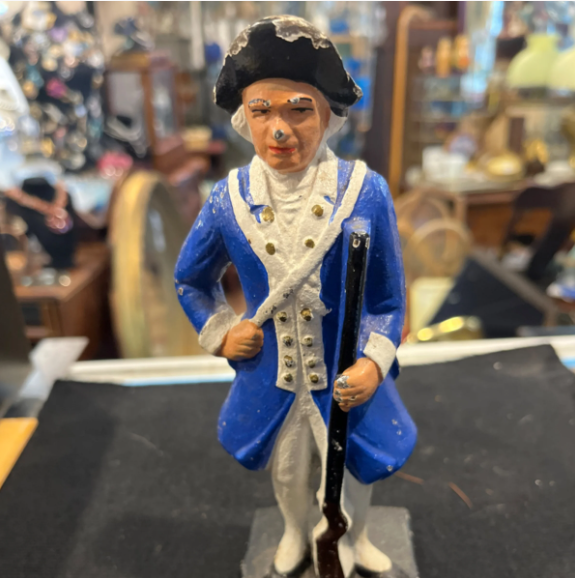
Cast Iron George Washington available @ Time’s Tin Cup !
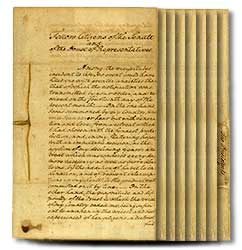
Presidential inaugurations are important civic rituals in our nation’s political life. The Constitution requires that presidential electoral votes be opened and counted by the Senate and House of Representatives meeting together, that the candidate with a majority of electoral votes be declared the victor, and that the president-elect, before taking charge of the office, swear an oath of office to “preserve, protect and defend the Constitution of the United States.”
On April 30, 1789, George Washington took the oath as the first president of the United States. The oath was administered by Robert R. Livingston, the Chancellor of New York, on a second floor balcony of Federal Hall, above a crowd assembled in the streets to witness this historic event. President Washington and the members of Congress then retired to the Senate Chamber, where Washington delivered the first inaugural address to a joint session of Congress. Washington humbly noted the power of the nations’ call for him to serve as president and the shared responsibility of the president and Congress to preserve “the sacred fire of liberty” and a republican form of government.
At that auspicious moment marking the birth of the federal government under the Constitution, Senator William Maclay of Pennsylvania observed that even the great Washington trembled when he faced the assembled representatives and senators. “This great man was agitated and embarrassed,” Maclay added, “more than ever he was by the levelled Cannon or pointed Musket.” After concluding his remarks, the President and Congress proceeded through crowds lined up on Broadway to St. Paul’s Church, where a service was conducted. Social gatherings and festivities closed the nation’s first inaugural day. Subsequent presidential inaugurations took place on March 4th (or March 5th when the fourth fell on a Sunday), until the Twentieth Amendment changed the date to January 20th beginning in 1937.
Discover more from ANTIQUES, VINTAGE
Subscribe to get the latest posts sent to your email.